Day in the Life of an English Major
You’re looking for your future major—but let’s be honest, you don’t know what half of them actually entail. This series fills you in on what these majors mean at a liberal arts college, so you can decide for yourself what’s most interesting to you. Here’s what an English major looks like from the perspective of an actual student.
An English major is very versatile. It can be layered with other majors and minors and taken in any direction, but it may also stand alone and be an effective first step of any career. Through literary analysis and various forms of writing, English majors develop the valuable skills of independent critical thinking, clearly communicating ideas, and understanding different perspectives. POV: You’re an English major.
7:30 a.m. Rise and Shine

Luther College Dining Services offers a wide variety of dining options for students, faculty and staff. Here is a view of the cafeteria, which is located on the lower level of Dahl Centennial Union.
My day starts bright and early. I wake up to get ready and eat breakfast before going to work. I have three on-campus work study jobs this semester, and I work every morning except Monday.
Most days, I eat breakfast with either a friend or my roommate, so we walk to the Caf together. There I’ll usually grab a gluten-free bagel with peanut butter and some fruit. My favorite breakfast, though, is hash browns and bacon. When they are on the serving line, it’s always a good start to my day.
Getting to hang out with a friend in the morning always puts me in a good mood, especially on days when I have back-to-back work and classes. Breakfast is a great time to socialize when your schedule is busy, as mine is this semester.
8:50 a.m. Hard at Work
Of the three jobs I have this semester, I work for two of them most mornings: my jobs as a marketing assistant and as the English department assistant.
When I’m working as a marketing assistant, I hang out in the marketing suite on the second floor of the Union and work on writing posts like this one for the Inside College Admissions Blog. It has been a great way to work in a real-world capacity and develop a wide array of skills that will be applicable to future career opportunities.
When I’m working as the English department assistant, I hang out on the fifth floor of Main and work on anything the English professors need from me. Sometimes that can look like making copies, scanning documents, or even running to the library to pick up a book. This work study has been a great way to get more involved with the English department and get to know the professors, even if I haven’t had a class with them yet.
Sometimes it can be tricky to balance work, school, and extracurriculars; but if you get organized, it is definitely doable and worth the experiences you can gain from work-study jobs.
Creating a schedule for yourself to ensure you get school work done makes a huge difference. Fairly quickly, you’ll figure out how long it usually takes you to read texts or write papers, and you can make a solid plan for when you’ll do homework.
11 a.m. Off to Classes
Lucky for me, my classes all start at 11 this semester. I’m currently taking four classes, three of which are English classes. My course load this semester highlights a reason why an English major is so compatible with double majoring: many English classes fill general education requirements as well as major requirements.
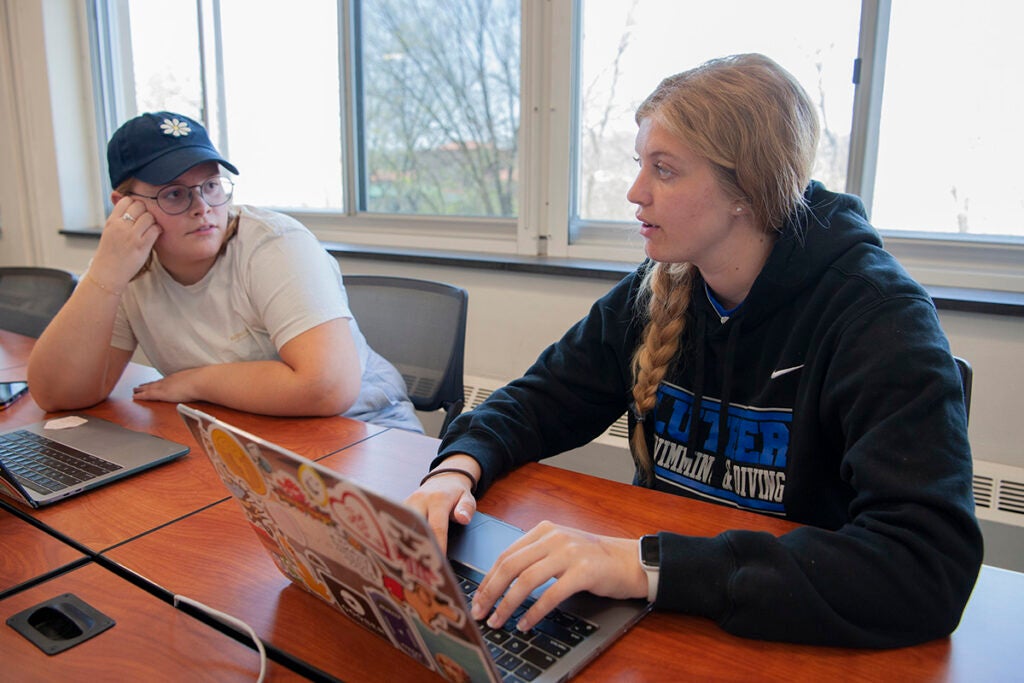
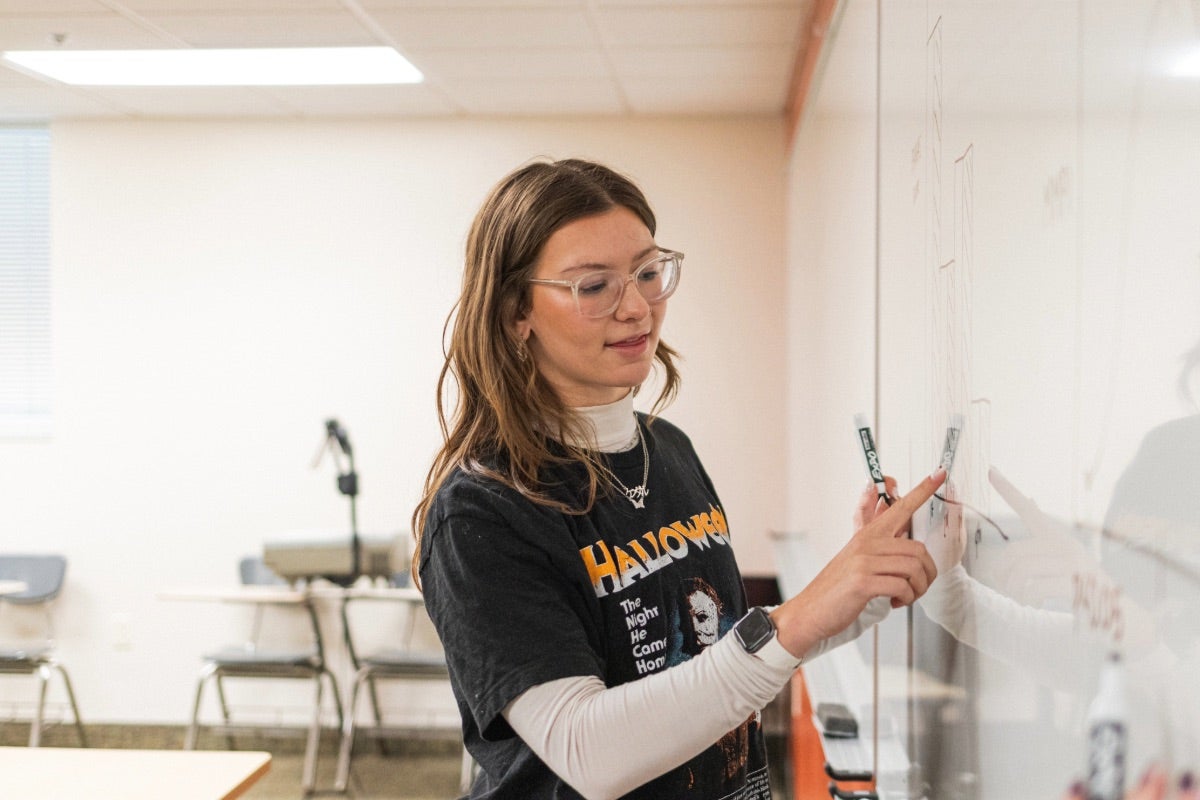
Most English classes are highly discussion based.
I am taking American English, an English course that fulfills Luther’s Social and Environmental Justice requirement; British Literary Traditions 1800-Present, another English course, which fulfills an English major requirement; Creative Writing, a third English course that fulfills both a major requirement and Luther’s Creative Literacy requirement; and Ethics, a philosophy course I am taking as an elective.
English classes are kept relatively small, so that students and professors can get to know each other and have meaningful discussions about the course topics and texts. The higher level courses tend to be the smallest; my 300-level classes this semester have six and 10 students. Other courses will have up to 20 students enrolled, as non-majors can take them to satisfy a gen-ed requirement.
Most English classes are highly discussion based. You get to have really interesting conversations with like-minded intellectuals in a collaborative environment. You learn so much, not only from the texts you read and the wealth of information the professors have to offer, but from hearing what other students have to say. It has been the most rewarding experience in my educational career.
Through these discussions, you learn valuable skills. A skill I didn’t even know I was missing that I have learned is how to closely read texts and think about them in their historical context.
For example, in ENG 351, the British Lit class, we’ve been discussing Emily Brontë’s Wuthering Heights alongside the Peterloo Massacre of 1819. This has allowed me to think more broadly about the meaning of the text; it’s not only about the author’s use of figurative language, but also how the world around her influenced her writing and themes.
I aspire to one day be a professor of literature, so I am making use of all the opportunities I can that will help me along that path.
I have always loved reading and writing, and once I realized that getting a PhD and being a professor would essentially mean I get to just do that forever, picking an English major was the easy next step.
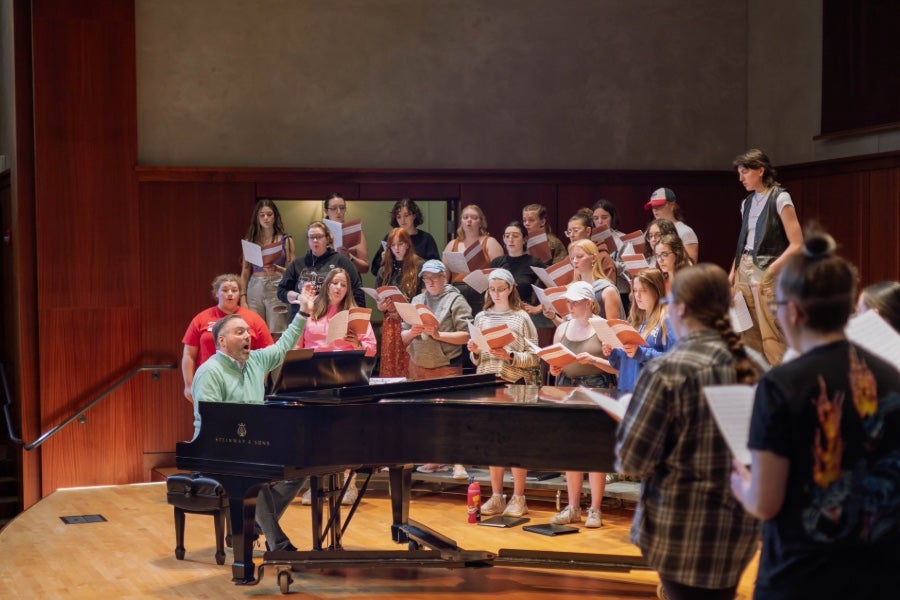
Balancing a music schedule is completely doable for a hardworking English major!
After those classes, the music part of my day begins. Depending on the day, I have either Cathedral Choir or Class Voice. Both start with warm ups, and then we work on our repertoire, either basic rhythms and notes or particular dynamics and tone.
Music is a new part of my life, and singing in Aurora during my freshman year was the first experience with music ensembles I had ever had. I’m excited about voice class allowing me to learn about singing and get more involved with the music department.
4 p.m. Sit Back and Relax
I like to spend the time between classes and dinner relaxing in my room. Especially because I often only have an hour or two, I usually choose to save my studying until after I eat.
Relaxing for me usually looks like lying on my bed and either scrolling on my phone, watching YouTube, or reading for fun. I’ll usually take this time to have a quiet moment to myself and recharge, so my eyes and mind will be bright and ready for the reading and thinking I’ll need to do for my homework.
5 p.m. Dinner Time and Study Time
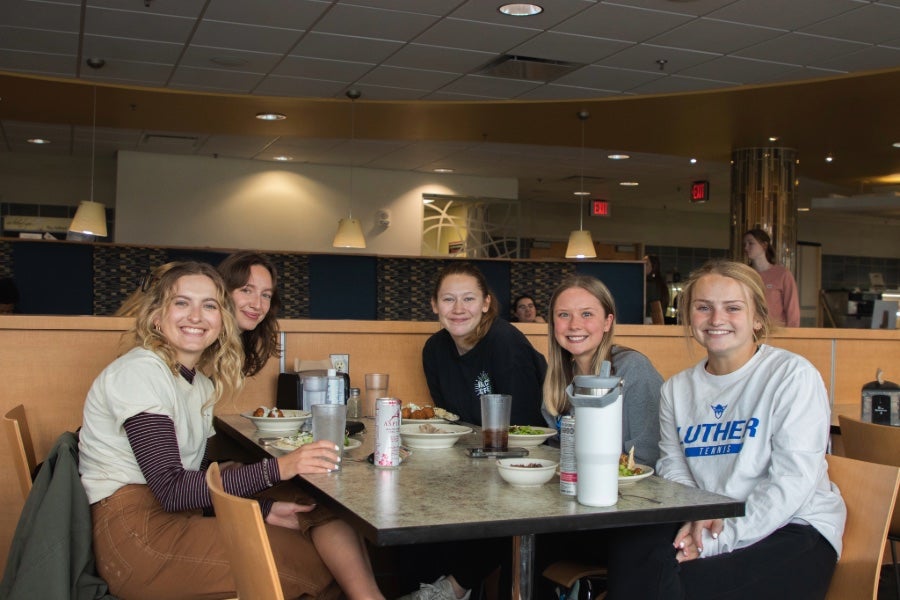
Find simple ways of spending time with friends to balance out your day.
I almost always eat dinner with a handful of friends. Much like breakfast, dinner time is a great place to have some fun and relax between class and work responsibilities.
After dinner, I’ll usually head to Preus Library to get some studying done. The library is my favorite spot to do homework and is by far where I’m most productive.
Staying on top of your assignments and always preparing for class are two of the most important things to do for any major, but particularly for an English major. Because it’s all about discussion and generating ideas, it’s hard to participate in class if you haven’t done the assignments, and participating in class is what being an English major is all about.
When it comes to homework and studying, most days I just have to get comfy and read or write for a long while. English professors will expect you to come to class having read and thought about the material, ready for class discussion.
I don’t do much of what you might traditionally picture as studying. For the most part, I don’t have any exams or quizzes, so there is nothing to memorize. Occasionally, I’ll have small quizzes on reading comprehension, but there aren’t many long exams; the focus is more on big ideas and broad critical thinking about themes than minute details.
As for papers, we often go through a drafting process. They require a lot of writing and rewriting and doing new thinking. Leading up to the due date for a paper, most English professors will have a class workshop or peer review, but what that looks like can vary depending on the professor and class. It’s also highly encouraged to meet with professors during their office hours to get further feedback and fully flesh out your ideas.
Professors will usually either have a calendar you can use to make an appointment with them or hours you can drop by their office without making a plan in advance.
I met with my Paideia professor, Dr. Weldon, many times to discuss my ideas for papers and get her feedback. It was the best thing I could have done, particularly for the PAID 112 research paper. She was a huge help in narrowing my thesis and giving me ideas for further research and sources I could look into.
7 p.m. Back to Work or Bed Time
A few nights a week, I settle in for the third and final job I have this semester: a writing tutor at the Barry Writing Center. If I have appointments, I work with students on any writing assignments they want help with.
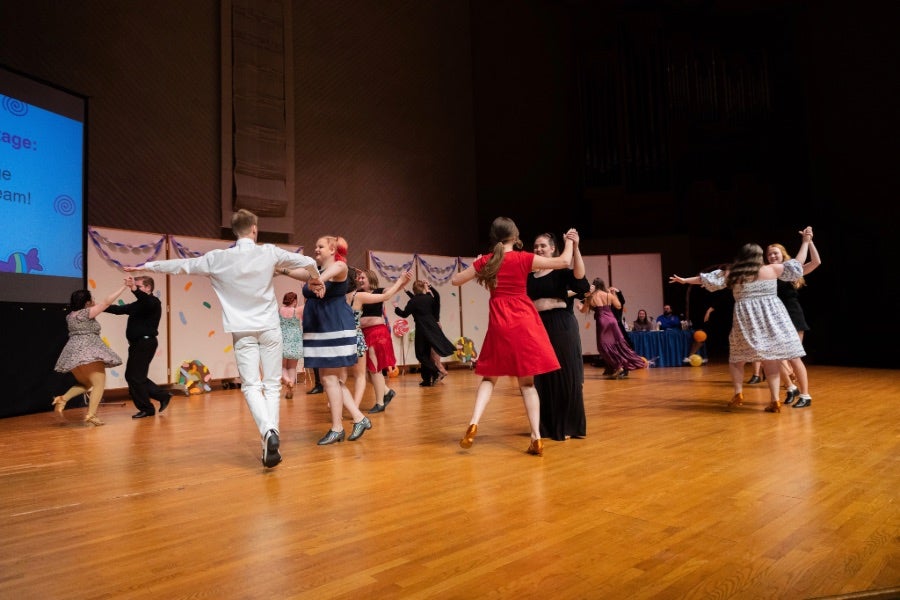
Joining new clubs is a great way to meet people.
If not, there are a multitude of other projects I can tackle, like posts for the Writing Center social media or editing the Writing Center handouts.
Another activity I participate in a couple nights a week is the Luther College Ballroom and Swing Team. We practice our six competition dances: Waltz, Tango, Foxtrot, Cha Cha, Rumba, and Swing. The team is close-knit, and I’ve been so glad to get more involved on campus through them this semester.
After my activities for the day are complete, I head home. I’ll end my night in a way that makes me feel relaxed, either by having some low-key hangout time with friends, sitting and chatting, or hitting the hay.
Thanks for tagging along today! Being an English major might not seem like a handful, but one can be a busy bee if they take advantage of the opportunities it offers them!
More Information About Majors
Related Posts
You’re looking for your future major—but let’s be honest, you don’t know what half of them actually entail. Here’s what a psychology major looks like from the perspective of an actual student.

Finals are stressful enough without spending hours studying the wrong way. From practice exams to getting enough sleep, learn simple study strategies that can help you feel more prepared and less overwhelmed when exam week arrives.
Admissions Office
Luther College
700 College Drive
Decorah, Iowa 52101
Phone: 563-387-1287