Day in the Life of a Psychology Major
You’re looking for your future major—but let’s be honest, you don’t know what half of them actually entail. This series fills you in on what these majors mean at a liberal arts college, so you can decide for yourself what’s most interesting to you. Here’s what a psychology major looks like from the perspective of an actual student.
Psychology is the study of how people think, feel, and behave. This understanding is important for helping people mentally, which is why Pieter chose to be a psychology major at Luther College. POV: You’re a psychology major.
6 a.m. Starting Strong

Pieter Rippentrop, psychology major at Luther College.
My days look very different depending on what day it is, but I am consistent about starting my morning in the weight room. As a busy student on the Luther golf team, classes, activities, and practices take up a lot of my time. This semester as a junior, I’m taking a social work class, which is surprisingly similar to psychology but a good change of pace, and an abnormal psychology class, which is about abnormal behaviors and how we can understand and change them. On other days, I take a principles of fitness class, which focuses on how to administer physical tests and understand physical fitness, and a health psychology class, which is all about the study of healthy behaviors and how to persuade people to make them.
I chose psychology because I wanted to do something that involved helping people. My mom is a psychologist, so I saw how her career was done and thought it seemed interesting. After a lot of introspection on my own interests, I realized I wanted to help people become better versions of themselves. As a long-time athlete, I wanted to give back to athletes specifically. My post-college goal is to go to graduate school for counseling psychology and specialize in sports psychology.
7:30 a.m. Breakfast and Class
Early before class, I have breakfast in the Caf and eat nutritiously after my workout. I usually have eggs, fruit, and milk. By the time I have class, I feel ready for the day. Psychology classes often have two styles of class: lecture and application.
During lecture, there are need-to-know concepts and definitions, important to understanding the human brain, how people function mentally, and ways to fix behaviors.
In application-based classes, there is typically small group discussion of applying those definitions and concepts to real life situations. This is my favorite part, as I love to engage with my classmates. Every psychology professor is unique and amazing in their own ways. They are always open for questions. I like that Luther College has small classes, as it is easy to engage with professors on a personal level.
10 a.m. Study Time!
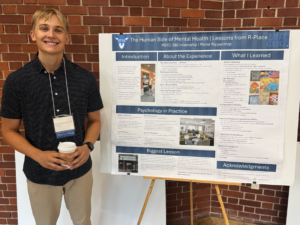
Having designated time to put in the work leads to impressive results.
I have a designated time I like to get my homework and studying done. I do this to prevent myself from procrastinating or getting overwhelmed. If I don’t have homework, I spend time making Instagram posts for the Luther men’s golf team, working on research projects, or getting ahead on readings. There is always something to do.
A lot of my studying involves reviewing notes and making sure I actually understand the concepts instead of just memorizing definitions. I usually try to connect the concepts to real-life examples like we do in class, because that helps me remember them. To prepare for exams, I’ll often make study guides, quiz myself, and explain concepts out loud to make sure I could teach them to someone else. Understanding the concepts is more important than just memorizing them.
The most challenging thing about classes is the workload. College is a lot different than high school, in that a lot of the learning comes from readings, homework, and projects. If you don’t manage your time, it’s easy to get behind. As long as you’re attending classes and staying on top of assignments, it’ll be just fine.
12 p.m. Again at the Caf
I eat lunch at the Caf every day. My go-to meal is in the Mexican line, and I get rice, beans, and chicken.
My favorite concept I’ve learned as a psychology major is the theory of operant conditioning. In order to change a behavior, you can use reinforcement (the addition of something positive) or punishment (the removal of something positive or addition of something negative). This concept has been really beneficial to me in my everyday life.
One of the biggest skills I’m developing with my major is communication. Psychology has taught me how to listen to people, ask better questions, and understand different perspectives. I’m also learning how to critically evaluate research and use evidence to understand people and their behavior. Another important skill is applying what I learn to real-life situations, which I think will be especially useful in a future career working directly with people. Overall, psychology is helping me develop skills in communication, empathy, critical thinking, research, and problem-solving that I can carry into a future career in mental health.
3 p.m. Extracurriculars
At three, I am playing golf. The golf season is both in the fall and the spring, so we are constantly practicing. I love the sport, and this is a fun time for me to forget about my work for a bit. We have a range at Luther as well as an indoor golf room with simulators. We also drive 10 minutes away to the Oneota Golf and Country Club to practice and play.

It’s important to take time for yourself.
In addition to being on the men’s golf team at Luther, I am in Luther’s Collegiate Choir, work in a research lab, and serve as Instagram chief for the golf team as a work-study job. I also volunteer at the Decorah Food Pantry once a week, doing my part to help the Decorah community.
It can be difficult to balance class with my daily life and hobbies. I am constantly busy with prepping for grad school, studying, practicing golf, working out, and everything in between. I make sure to carve out time for myself every night, and before bed I make sure to do things that bring me joy. I really like watching football, and my favorite team is the Packers. (Go Pack Go.) By blocking off time for homework and time for relaxing, it makes it easier to create a balanced schedule.
9:30 p.m. It’s Worth It in the End
After dinner, I will take time for myself. I believe that taking time for your mental health and hobbies is really important. I am very extroverted, but I appreciate my alone time. My favorite relaxing activity is hiking in the surrounding bluffs in Decorah. I love to go on night walks, watch movies, hang out with friends, play ping pong, or watch sports. Each night looks different, but I make sure to decompress and relax.
As a first year, schedule out your time. By knowing what you are doing and when, you are much more likely to succeed in your classes, learn more, and have more time for fun with your friends. Really make sure that you are engaging deeply in the content. Go past the surface-level definitions, see how concepts apply to real life. The more effort you put into your education, the more you will get out.
The most rewarding part of being a psychology major is knowing that someday I will be able to help people live a happier and healthier lifestyle.
Thank you for following Pieter’s day-in-the-life! Being a psychology major is hard work!
More Information About Majors
Related Posts
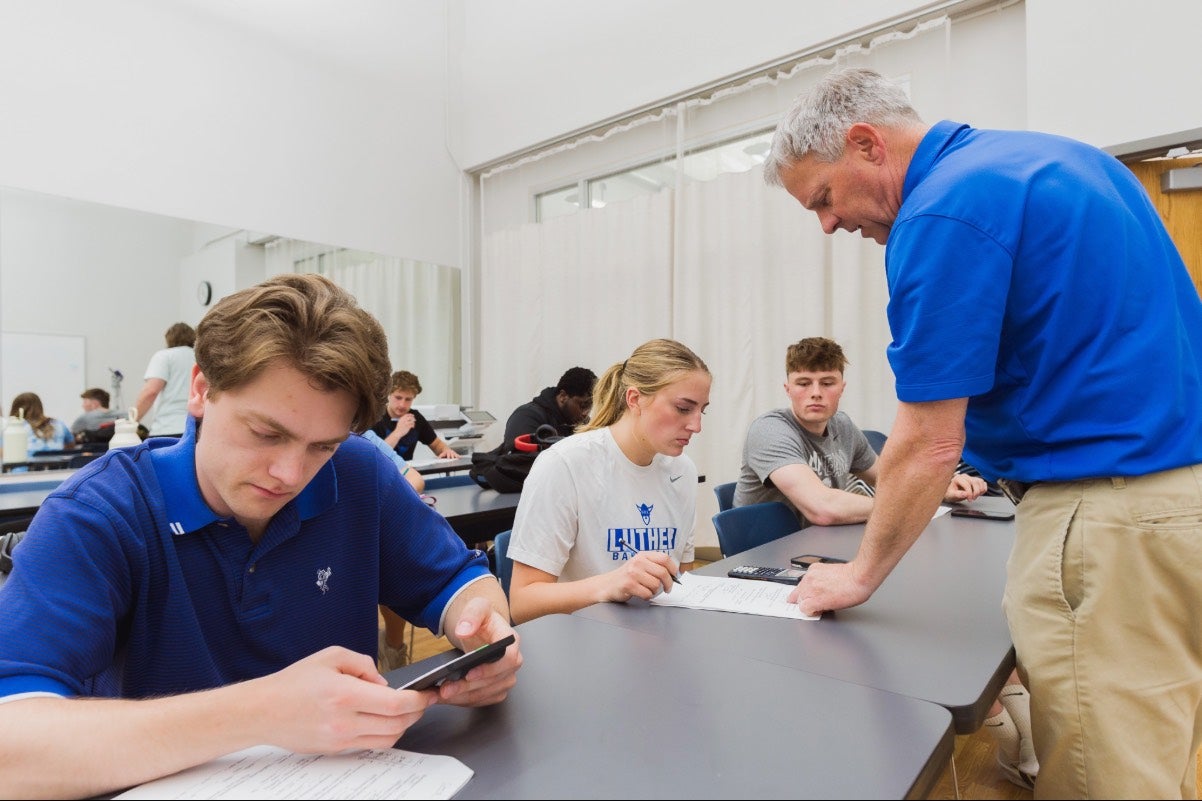
Finals are stressful enough without spending hours studying the wrong way. From practice exams to getting enough sleep, learn simple study strategies that can help you feel more prepared and less overwhelmed when exam week arrives.
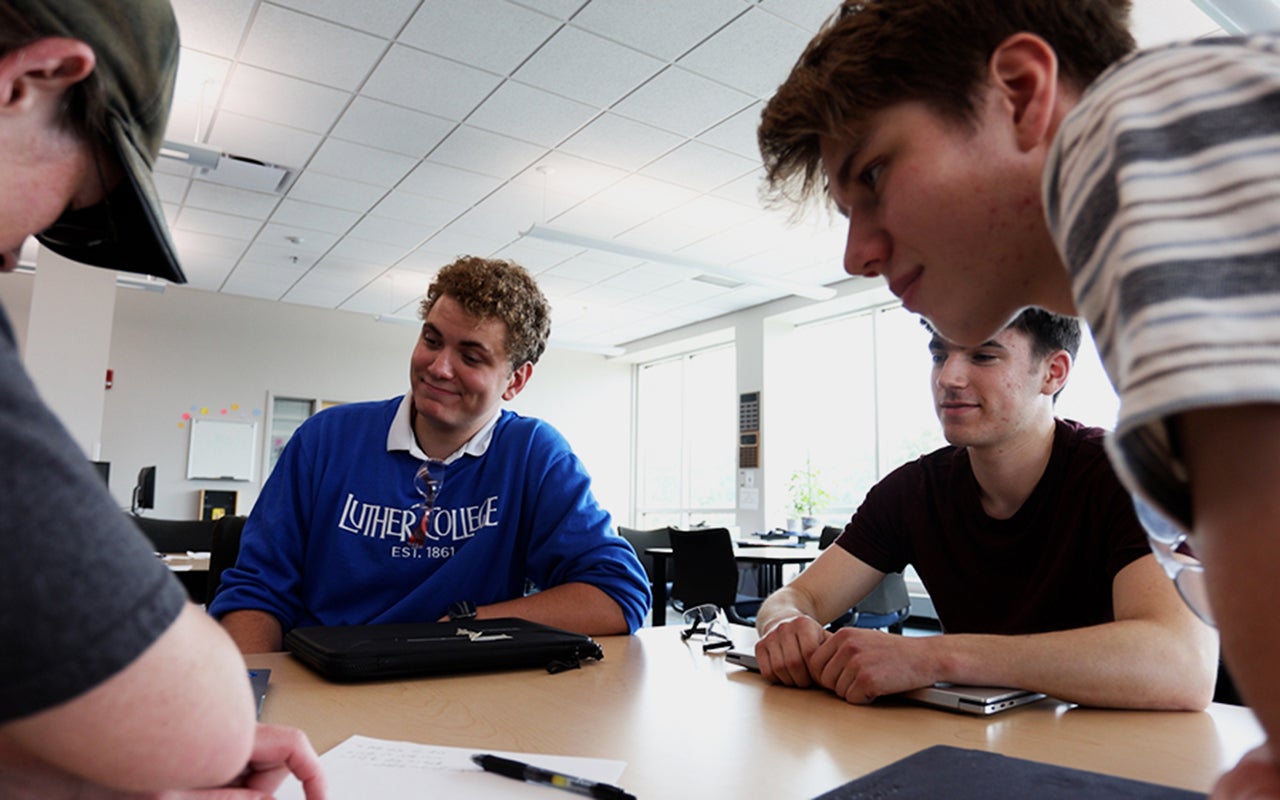
What does it mean to be an undergraduate summer researcher? How do I find an opportunity to research? What’s it like to stay at college during the summer? Read on to find out how to become an undergraduate summer research student, what daily life is like, and what students say about the benefits of spending a summer on a research project.
Admissions Office
Luther College
700 College Drive
Decorah, Iowa 52101
Phone: 563-387-1287