While studying chemistry at Luther, you’ll learn to:
- Analyze chemical systems to understand their physical nature and reactivity.
- Synthesize, purify, and characterize new molecules.
- Work safely in a chemistry laboratory with both chemicals and instrumentation.
- Interpret and communicate scientific information.
- Design experiments to provide answers to unanswered questions and interpret experimental results in an ethical way.
Nationally Recognized Program
Luther’s chemistry department is recognized nationally by the American Chemical Society for the rigor and coherence of the chemistry curriculum, the breadth and accomplishments of the chemistry faculty, and the quality of the chemistry facilities.
Luther is one of only nine higher education institutions in the state of Iowa to have a chemistry program approved by the American Chemical Society. This means that Luther students have the opportunity to earn a degree that is certified by the American Chemical Society. It is a credential that distinguishes them to employers, as well as to graduate and professional schools.
Learn more about the Chemistry major/minor
Pre-Health Studies
Are you thinking about becoming a doctor, physician’s assistant, veterinarian, optometrist, dentist, physical therapist, occupational therapist, or pharmacist? A pre-health studies program would be a good fit for you.
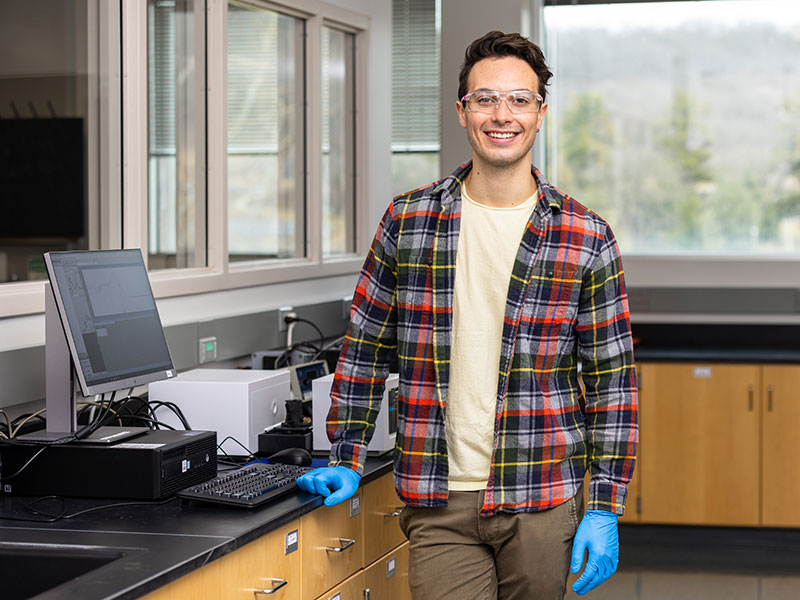
William Benjamin '22
Learn how Luther’s ability to combine his love for music, interest in chemistry, and passion for perfumery, helped him find his home here.
McKenna Campbell-Potter '16
Discover why she believes that Luther prepared her well for life as a medical student and future physician.

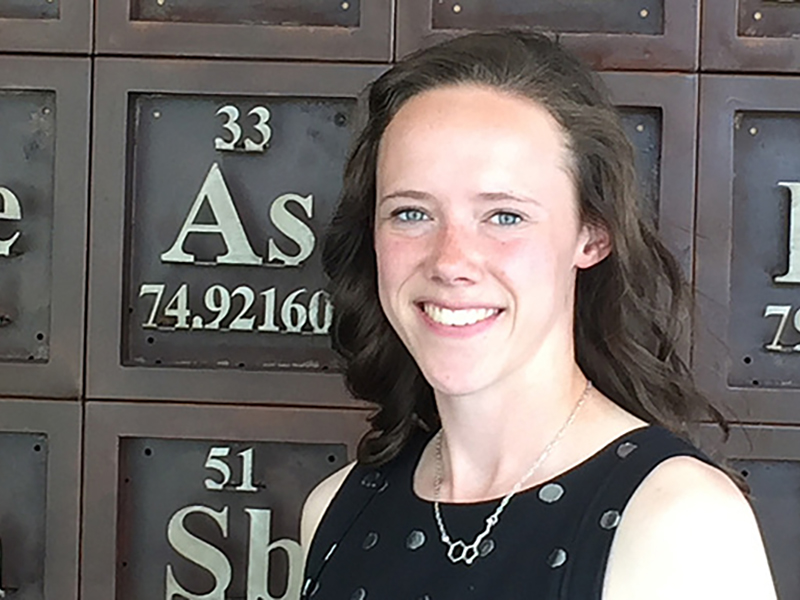
Cecelia Douma '16
Meet Cecelia Douma ’16 and learn why it was important for her to play soccer while studying chemistry.
More info about chemistry at Luther
Students majoring in chemistry and biology are required to take Chemical Principles (general chemistry).
When? Chemistry majors should take Chemical Principles beginning in the fall semester of their first year. Biology majors who intend a second major in chemistry are advised to take Chemical Principles in the fall semester of their first year in lieu of Biology 151. If you plan to major in biology with no second major in chemistry, the choice of either taking Chemical Principles or Biology 151 in the first year at Luther is not critical and depends on a number of factors that should be discussed with your academic advisor.
Which Chemical Principles course—151 or 201? Chemistry 151-152 is the most common sequence of Chemical Principles courses. Chemistry 201 is Luther’s Advanced Chemical Principles course. Chemistry 201 covers much of the same material as in Chemistry 151 and 152, only at a faster rate. This enables students who take 201 in the fall to take Analytical Chemistry (202) in the spring. The sequence 201/202 can be considered a year of advanced general chemistry.
Students with a strong chemistry background should talk with an academic advisor or chemistry instructor about taking Chemistry 201.
It is clear that the high demand for chemistry professionals will continue into the future. Courses offered by the Luther chemistry department provide a foundation in chemical principles and laboratory operations for students with any number of career interests.
Education positions are available in secondary schools and, after graduate study, in colleges and universities. Research opportunities can be found in both industrial and governmental laboratories. The chemistry major is recognized as sound preparation for students seeking careers in medicine, dentistry, or pharmacology. With supplemental coursework, the chemistry major will prepare a student for a career in fields such as environmental science, energy science, geology, and medicinal chemistry.
Luther chemistry majors are heavily recruited for positions in industry, post-secondary education, and public service. Additionally, many of our majors enter the health profession or pursue graduate level work in chemistry, biology, or environmental science.
Members of the ACS student chapter have access to the organization’s national employment service. In addition, Luther’s Career Center provides valuable assistance in finding the career that best suits each student.
The American Chemical Society has a wealth of information regarding career opportunities in chemistry. Additionally, the Luther Career Center is an excellent resource for students exploring career options. Below are several links to this type of information for those considering careers in chemistry.
The Chemistry Department is housed in Sampson Hoffland Laboratories. This building is a modern, well-equipped facility with ample laboratory space and an impressive array of instruments for instruction and research. Luther chemistry students learn to operate modern chemistry instrumentation for molecular and atomic spectroscopy, chromatography and separations, microscopy, and electrochemistry.
Beginning in general chemistry and throughout the chemistry curriculum, students use computers equipped with special laboratory interfaces to program and collect data for subsequent spreadsheet and graphical analysis.
Sampson Hoffland Laboratories also houses the department of biology as well as generous amounts of student study space.
Chromatography
- Agilent 1100 series HPLC
- Jasco HPLC 2089s
- Agilent 6890N/5973N GC-MS
- ThermoScientific traceGC Ultra
- Agilent GC FID 7890a
Spectroscopy
- Bruker Fourier 300 NMR Spectrometer (300 MHz)
- Two Jasco FTIR Infrared Spectrometers (Models 4200 and 4600)
- Agilent 5110 ICP-OES
- Buck Scientific 200A AA Spectrometer
- Cary-Varian 100 UV-Vis Spectrometer
- Jasco FP6300 Spectrofluorometer
- Jasco V650 Spectrometer
- Agilent Cary 8454 Spectrometer
- Jasco P2000 Digital Polarimeter
- Edinburgh Instruments Mini-tau Lifetime Fluorescence Spectrometer
- Edinburgh Instruments CD900 Spectrofluorometer
- DeltaNu Advantage NIR Raman Spectrometer
- Mettler Toledo React IR 4000
- StellarNet Raman Spectrometer
- Ultrafast Systems Kronos Flash Photolysis
Other
- MBraun Unilab Inert Atmosphere Glovebox
- VAC Solvent Purifier
- Faraday MP Potentiostat
- Microscopy facility