A Summer with Redstarts
Cody Kent, assistant professor of biology, lucked into his area of research through working with a mentor. As an undergrad at Ohio Wesleyan University—which, like Luther, has a culture of student-centered research—he worked with Jed Burtt on feather-degrading bacteria in bird plumage. It sparked Kent’s interest in species interactions, which he went on to study through a PhD at Tulane University, a postdoc at the University of Maryland–College Park, and three years of teaching at Frostburg State University in Maryland.
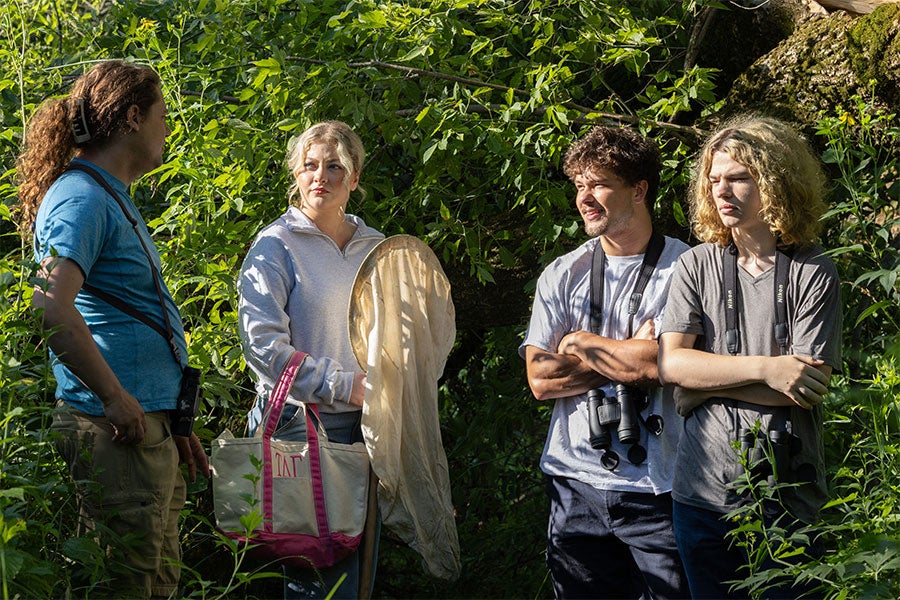
In summer 2026, biology professor Cody Kent (far left) mentored biology majors (from left) Ava Johnson ’27, Henry Akers ’29, and Logan Chaney ’28.
It didn’t take Kent long in the academic pipeline to realize that he wanted to end up back at a liberal arts college, leading undergraduate research. “I like working with undergrads,” he says. “They ask interesting questions, and it’s fun having them navigate finding novel things that interest them.”
Kent joined the Luther faculty last year, bringing his background in student-centered research with him.
Over the summer, Ava Johnson ’27, Logan Chaney ’28, and Henry Akers ’29 joined Kent in researching species interactions and niche diversity among American redstarts and yellow warblers, as well as a related project on turtle ants. A species’ niche, Kent says, is “its role in its community and ecosystem. One of the biggest aspects of that is the resources a species is consuming.”
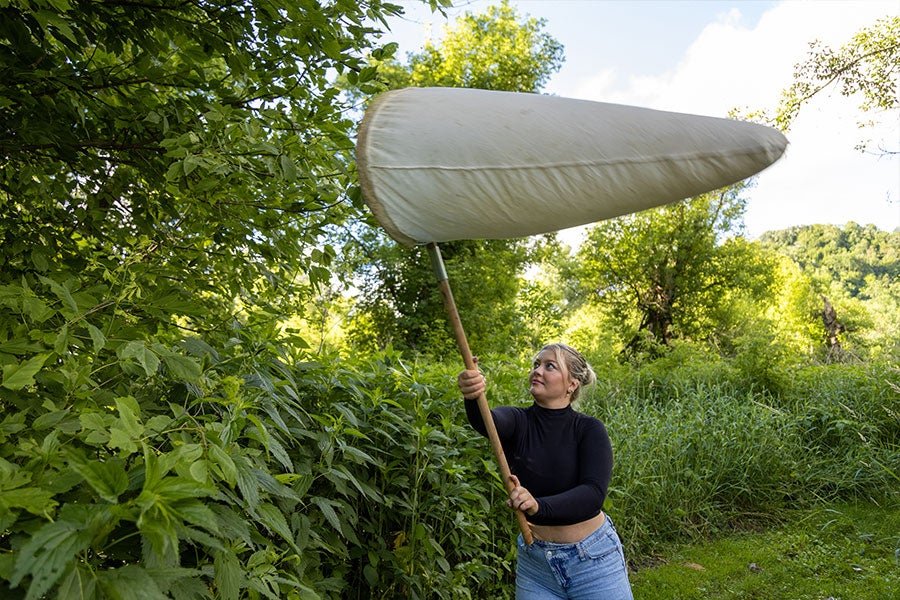
Ava Johnson '27 surveyed insect abundance to explore shifts in the fundamental niche of turtle ants.
he Driftless area is one of the densest population areas in the country for the American redstart, and Chaney and Akers spent their field time identifying foraging maneuvers these birds use to catch insects in Luther’s natural areas. Chaney became interested in looking at how weather and time of day affect foraging maneuvers, specifically the height at which redstarts forage in the tree canopy. Akers looked at whether foraging maneuvers shift toward behaviors that require more energy during times of food scarcity.
Johnson surveyed insect abundance in the same areas, while using the related turtle ant project to explore shifts in the fundamental niche—all of the resources a species could use (in this case, consume)—and realized niche—what it actually uses across a large number of species at once.
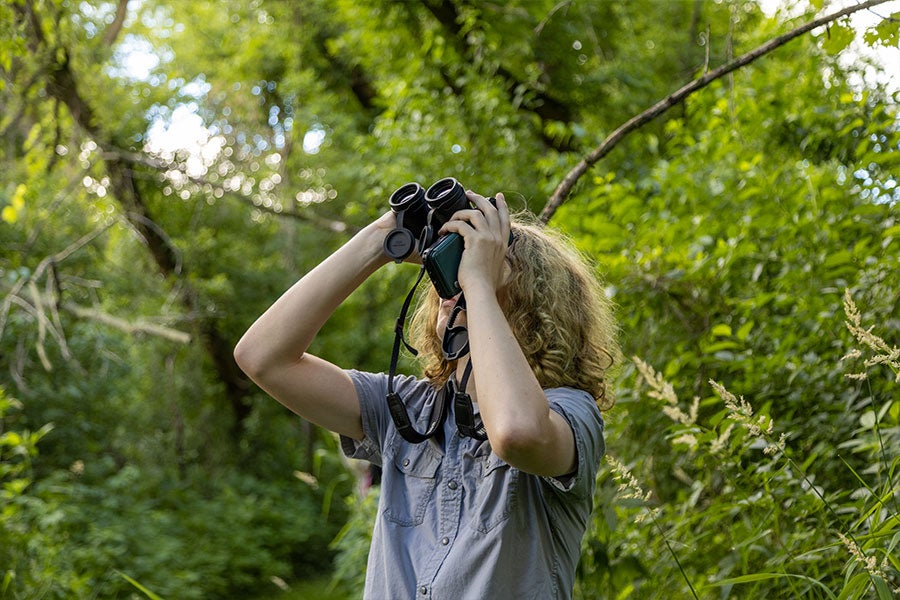
Logan Chaney '28 researched how weather and time of day affect redstart foraging maneuvers.
One thing that excites Kent about the research his team is doing is that it takes a multispecies approach. “Traditional competition and niche research has focused largely on pairwise interactions between two species, and there’s usually a lot more going on,” he says. He expects that taking a wider look at things, rather than focusing on only two species at a time, will require novel ways of analyzing data that may benefit other fields.
But regardless of how much they change or grow the field of ecological niche diversity, the summer was a valuable learning experience for Kent’s students. Chaney, a biology major from St. Charles, Minn., says, “Originally, I wasn’t sure how interested I’d be, but field research is in the cards [for my future career] now. During the summer, I developed a love for it.”
Kent’s student researchers were funded through a National Science Foundation grant, but you can help support student-faculty research at Luther by making a gift at givenow.luther.edu.