Day in the Life of an Undergraduate Summer Researcher
Research feels like a daunting thing. What does it mean to be an undergraduate summer researcher? How do I find an opportunity to research? What’s it like to stay at college during the summer?
Read on to find out how to become an undergraduate summer research student, what daily life is like, and what students say about the benefits of spending a summer on a research project.
How to Become a Researcher
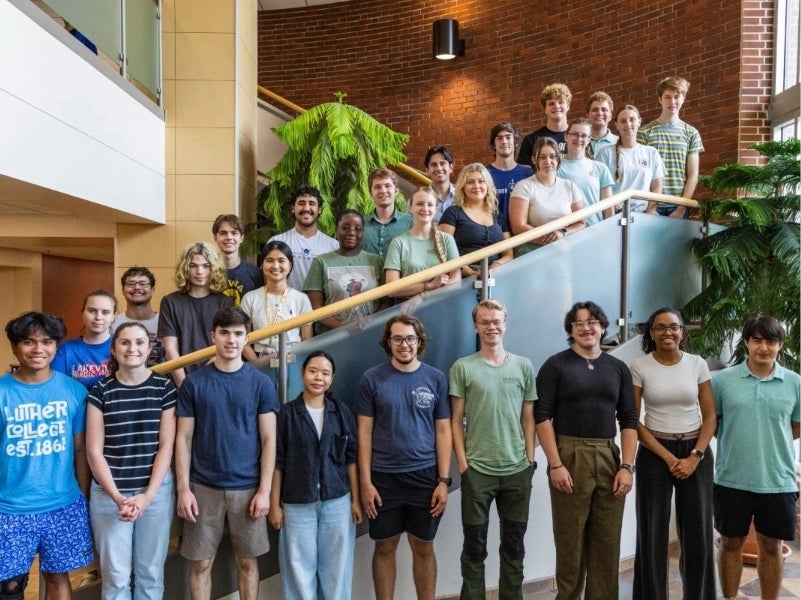
Luther students often collaborate with faculty on research projects. In summer 2026, 46 students worked for 24 different faculty mentors in a variety of fields.
The most common way to become an undergraduate student researcher is to maintain a good relationship with your professors. Be engaged in class, ask questions, show enthusiasm for course content, and go to office hours. That could set you up for a couple different ways of getting involved in research:
- If a professor sees that you care about your academics and want to be more involved, they might ask you to join their research project.
- Maybe you heard your professor talk about their research. Most research projects extend over multiple summers. Ask them if there are any opportunities to join them.
If your professors aren’t involved in a research project right now, you can also apply for opportunities through Handshake, a job searching app aimed toward college students. And check out the undergraduate research opportunities page for more information.
Average Day
Most students stay on campus for about eight weeks while doing their summer research. They usually spend around eight hours per weekday on their research project, like a normal work day.
They get a lunch break, and many students will go to the on-campus summer dining option, Oneota. Oneota serves a different special every day and students can use dining dollars, which are part of their summer meal plan. Sometimes students like to do other things for lunch, like pack a pre-made lunch, or stop somewhere in Decorah, like the local coffee shops, Impact or Magpie.
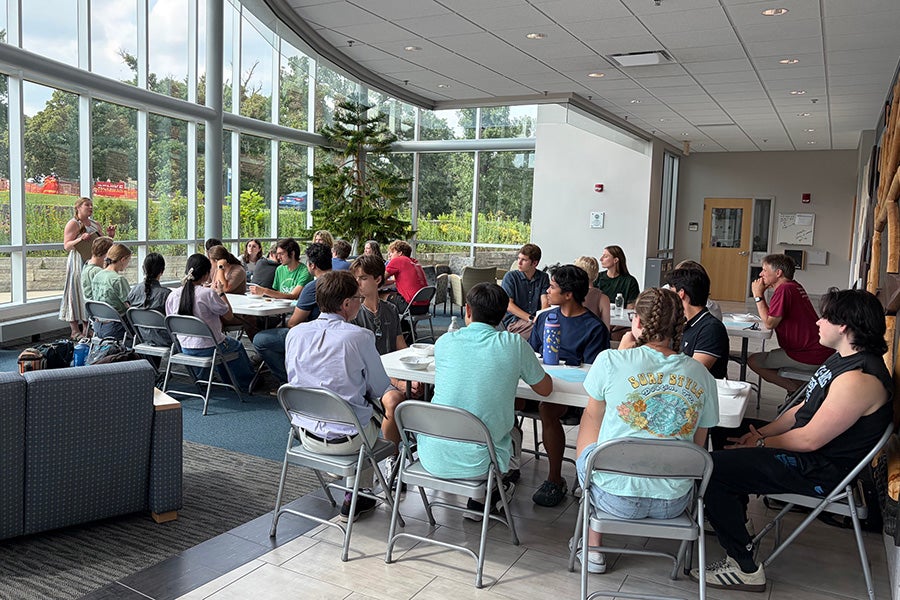
Student researchers at the end-of-summer gathering and ice cream social.
Once per week, student researchers attend a workshop. These workshops help students think about their options after graduation and work toward a specific goal. Some of the topics include research practices, fellowship opportunities, job application materials, exploring future careers, and more. Students find a lot of great information regarding creating a future career and learning strong research techniques.
The on-campus dining options are often closed during the summer evenings, and students are on their own for dinner. This can feel daunting if you’re a person who hasn’t been in charge of your own meals for most of your life. Many students cook with friends in the residence hall kitchens, go out to one of the local restaurants, or make a quick microwave meal.
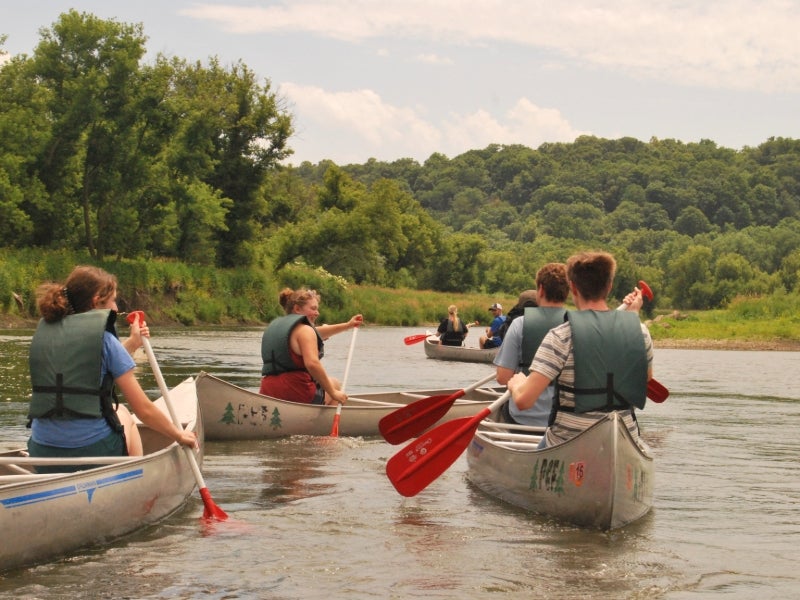
Student researchers take a break with a group canoeing trip on the Upper Iowa River.
If you don’t have a car, don’t fret, Residence Life runs a shuttle to and from Walmart on specific days. This is a great opportunity to get some groceries for the week and make sure you’ve got enough food. There’s also a free food pantry through College Ministries. It isn’t enough to depend on for the entire summer, but it’s a great place to go when options (and cash) run low.
After the day is done, researchers have free time to go hang out with friends or do fun things in Decorah. With most of campus gone, the activities look different than the school year, but there are still tons of options. Many students use this free time to go to the Legends Gym on campus, go tubing in the Upper Iowa River, swim at the Decorah Pool, bike the local trails, watch TV with friends, or hang out in the social lounge and play games.
Examples of Research Projects
Ecoevolutionary Drivers of Niche Diversity in Birds and Ants
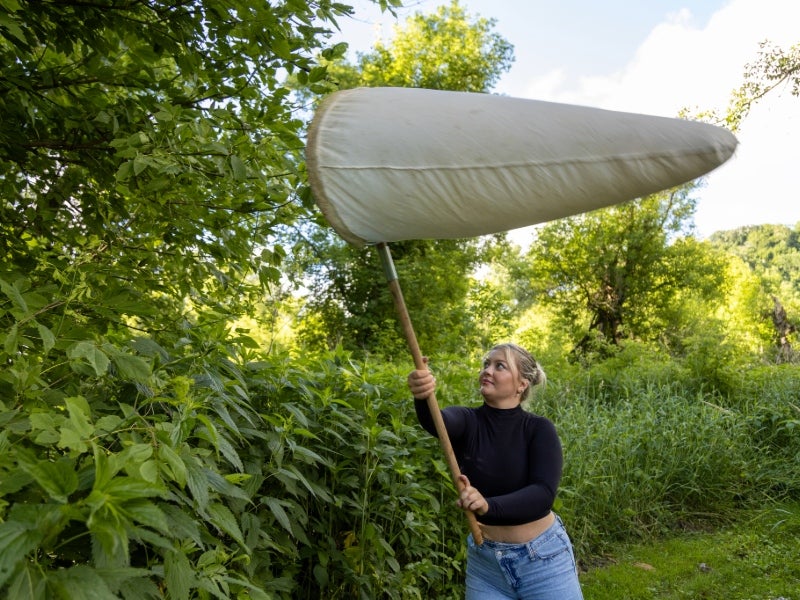
Ava collecting insects as part of her research project.
Ava is a student researcher on the project Ecoevolutionary Drivers of Niche Diversity in Birds and Ants. Every morning, she goes to two different locations on campus and collects insect data. She identifies the insects and inputs them into a data set that will be updated each summer for the next few years. The project needs multiple years’ worth of data, with the ultimate goal of understanding how birds change their foraging behavior in response to prey.
She spends the second half of her day working on another project, Realized vs. Fundamental Niche and Competition in Turtle Ants. She does research and analysis on data sets collected by her faculty advisor and another professor at George Washington University in Washington, D.C.
She works closely with her biology professor, who guides her research in the right direction, helps when she feels stuck, and challenges her to take her research further and try new analysis techniques that she hasn’t tried before. She also meets with other student researchers every week to discuss their work and related research articles.
Research Has "Lots of Entry Points for Our Students"
Meet Michel, David, and Gus, who did research on polymer microspheres with chemistry professor Jen Baldwin.
Polymer Microspheres: Fabrication, Characterization, and Applications
David is a student researcher with the project Polymer Microspheres: Fabrication, Characterization, and Applications. He starts his day with a morning meeting, discussing the day’s goals with his professor and two fellow student researchers. At the beginning of the summer, they focused on creating the polymer samples they were going to analyze. Mid-summer, they focused on a mix of characterizing and synthesizing the polymers. By the end of summer, they focused almost entirely on characterizing the samples. This means their day would often be a variety of different types of research: microsphere synthesis, sample characterization (using SEM, fluorescence, Raman, FTIR, and NMR), researching new project angles and cleaning glassware.
The faculty advisor for this project is very involved in the process. She meets with the students every morning and is open to questions throughout the day. The student researchers can also lean on each other for support. David worked primarily with one student researcher, focusing on controlling fluorescent dye release rate from the polymer spheres, while their other classmate focused on wrapping up his portion of the project.
This project can seem very overwhelming as a younger student with less experience, but with the support of upperclassmen and your professor, this is achievable for any student with enough dedication and ambition.
Global Organ Specifications for the Encyclopedia of the Organ
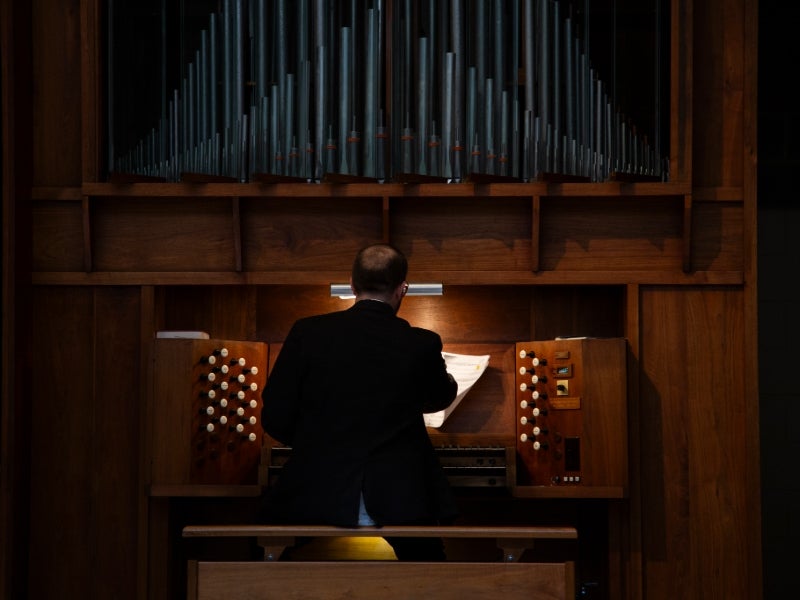
Professor Alex Meszler, general editor (with Kimberly Marshall) of the forthcoming Encyclopedia of the Organ, playing the organ in the Sundt organ studio at Luther.
Sophia spent her summer helping with Global Organ Specifications for the Encyclopedia of the Organ. She spent her days going through documents of information on organs from different countries. This information has been compiled by a large group of researchers. She fact checks everything or finds sources for information that hasn’t been cited. Then, she makes sure everything is formatted correctly for the encyclopedia. If an organ doesn’t have enough information, she does her own research through the library or interlibrary loans.
She worked heavily with her faculty advisor for the first half of the project. They met daily and worked together on the project. For the second half of the summer, she has been working from home, having virtual meetings with her advisor. Despite the distance, she is always able to ask him questions if she gets stuck or needs guidance.
Luther's Research Program
Related Posts
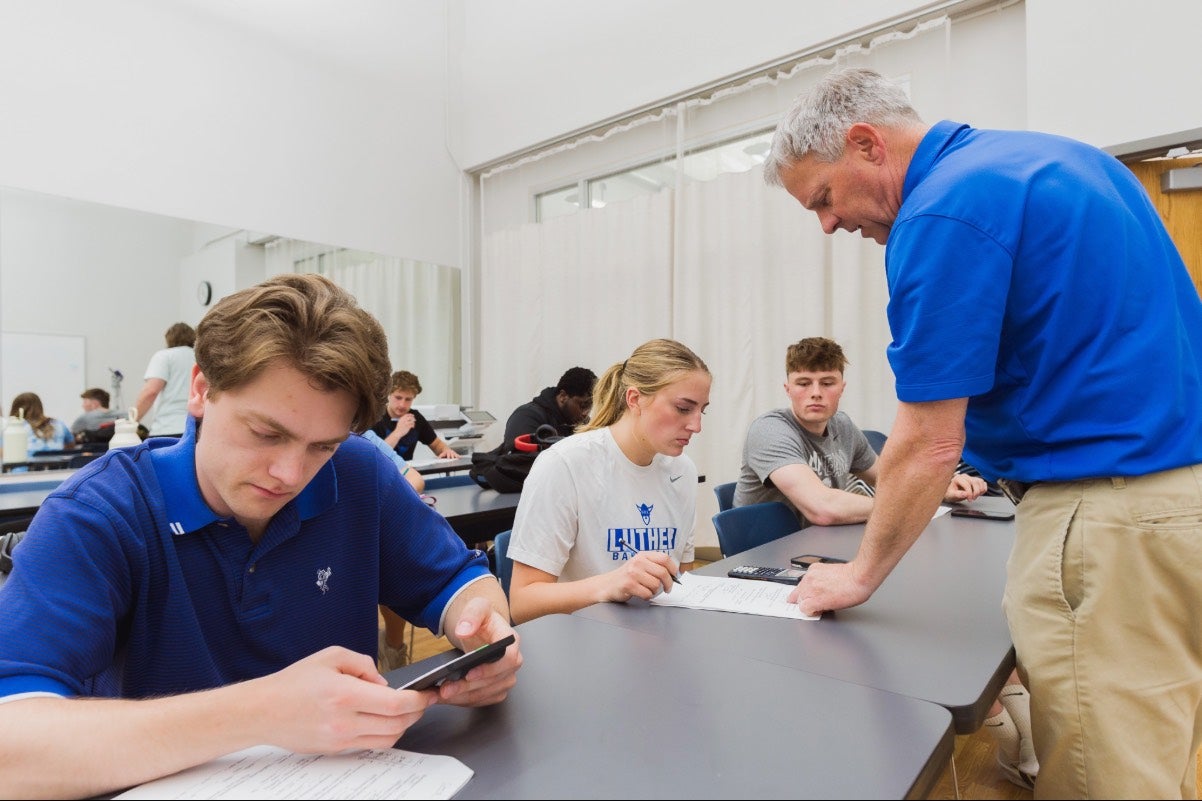
Finals are stressful enough without spending hours studying the wrong way. From practice exams to getting enough sleep, learn simple study strategies that can help you feel more prepared and less overwhelmed when exam week arrives.
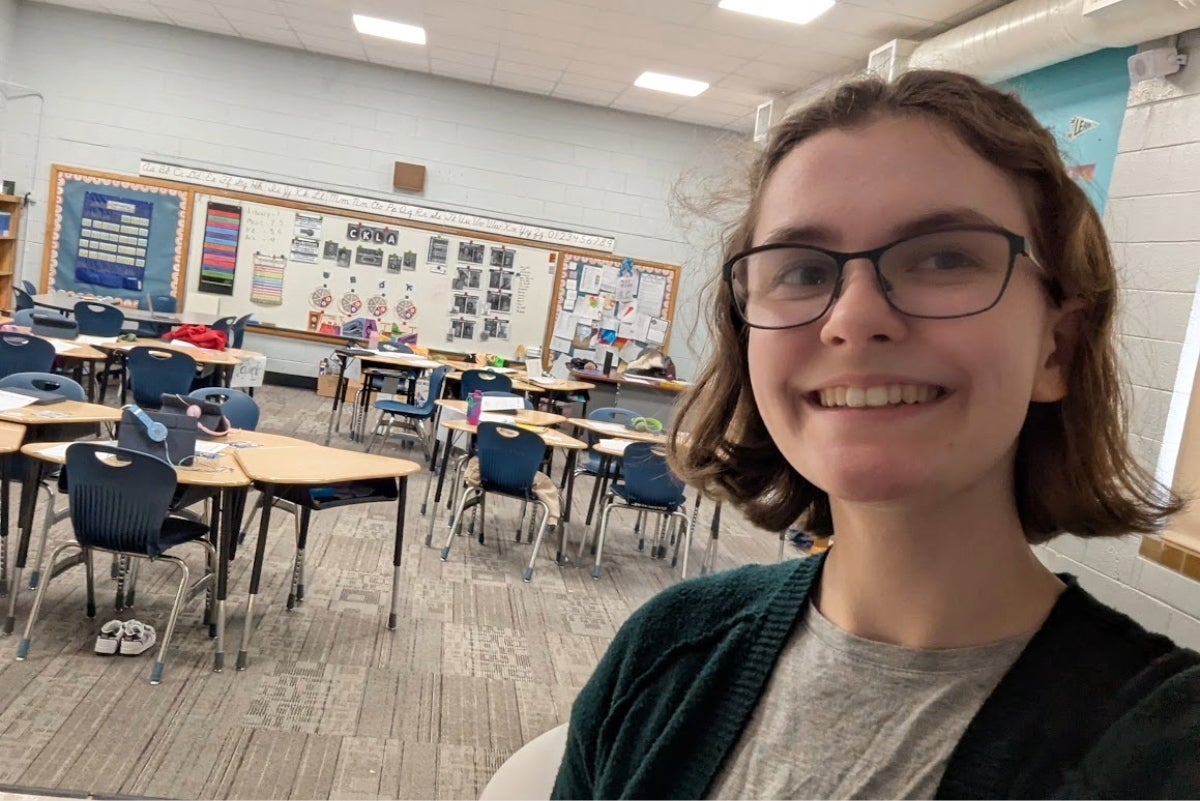
In this post, you’ll learn about Megan’s experience as an elementary education major with a reading endorsement, as well as a psychology minor.
Admissions Office
Luther College
700 College Drive
Decorah, Iowa 52101
Phone: 563-387-1287